Maximizing Return on Ad Spend (ROAS) is not about increasing budgets—it is about increasing precision. In today’s competitive digital landscape, smarter targeting and disciplined conversion optimization consistently outperform brute-force scaling. Brands that approach advertising with structured experimentation, audience intelligence, and rigorous performance analysis not only reduce wasted spend, but also create sustainable revenue growth.
TLDR: Improving ROAS requires better targeting precision and systematic conversion optimization. Focus on high-intent audience segmentation, first-party data activation, full-funnel alignment, landing page testing, and bid automation driven by real performance data. Eliminate waste before scaling budgets. Sustainable ROAS gains come from disciplined testing and data-backed decision-making—not guesswork.
1. Prioritize High-Intent Audience Segmentation
Not all traffic has equal value. One of the fastest ways to improve ROAS is to refine targeting to prioritize audiences demonstrating high purchase intent. Instead of optimizing for clicks or impressions, structure campaigns around signals that indicate proximity to conversion.
Effective high-intent signals include:
- Recent website visitors (especially product page views)
- Cart abandoners
- Past purchasers for upselling or cross-selling
- Engaged video viewers
- Email subscribers
Layer demographic and behavioral signals with contextual alignment. For example, instead of targeting broad interest categories, combine behavioral signals with purchase-driven keywords or product engagement activity.
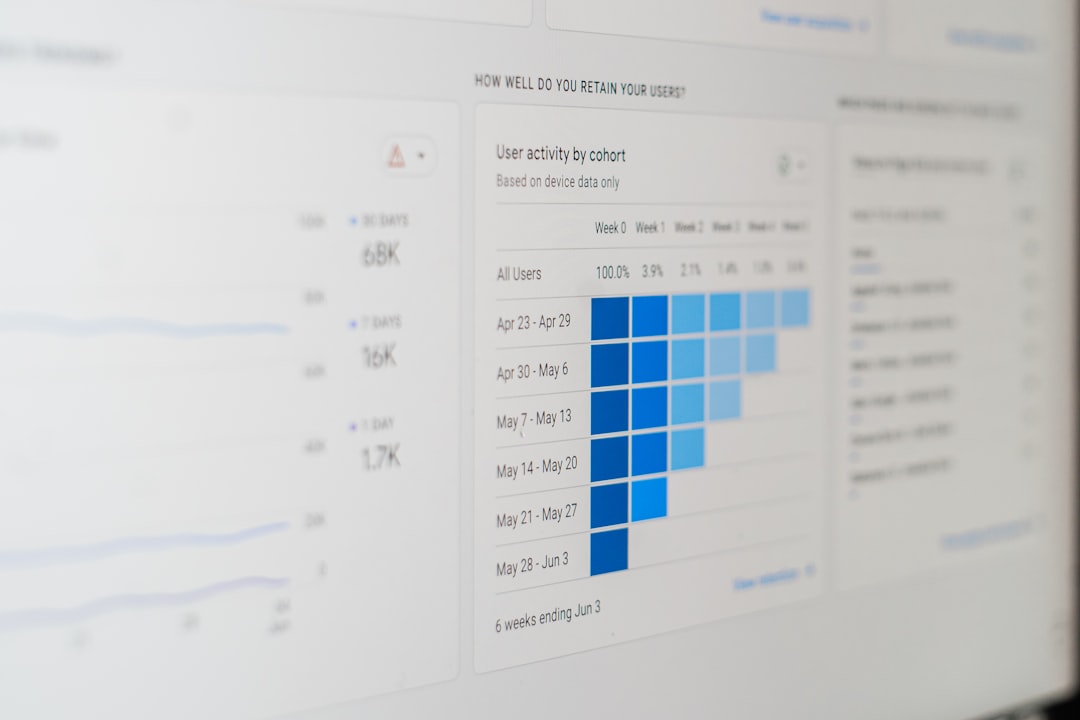
Key principle: The closer a prospect is to purchase, the more aggressively you can bid. Segment campaigns by purchase stage and assign budgets proportionally to expected conversion probability.
By isolating high-intent segments, marketers frequently see immediate improvements in:
- Conversion rate (CVR)
- Cost per acquisition (CPA)
- Revenue per visitor
Smarter targeting starts by narrowing—not expanding—your audience.
2. Activate First-Party Data for Precision Targeting
With privacy regulations and platform tracking limitations increasing, first-party data has become one of the most reliable levers for improving ROAS.
First-party data includes:
- CRM records
- Customer purchase history
- Email engagement data
- Loyalty program participation
- On-site behavioral tracking
Uploading customer lists into advertising platforms enables:
- Customer match campaigns
- Lookalike or similar audience modeling
- Exclusion of existing customers in acquisition campaigns
Lookalike audiences built from high-value customers often outperform interest-based targeting because they are modeled from proven revenue-generating profiles.
Platform Comparison for First-Party Targeting
| Platform | Customer Match | Lookalike Modeling | Purchase Value Optimization |
|---|---|---|---|
| Google Ads | Yes | Yes (Similar Segments) | Yes (tROAS bidding) |
| Meta Ads | Yes | Yes (Lookalike Audiences) | Yes (Value Optimization) |
| LinkedIn Ads | Yes | Limited | No native value bidding |
| TikTok Ads | Yes | Yes | Yes |
Use value-based lookalikes (built from highest lifetime value customers rather than all customers) to further increase precision. The goal is not just more conversions—but more profitable conversions.
3. Align Messaging With Funnel Stage
Targeting precision loses impact if creative messaging does not match user intent. Conversion rates decline when awareness-stage messaging is shown to decision-ready prospects—or vice versa.
Break your funnel into three simplified stages:
- Top of Funnel (Awareness)
- Mid Funnel (Consideration)
- Bottom of Funnel (Conversion)
For each stage, align:
- Ad copy tone and depth
- Offer strength
- Landing page complexity
- Call to action clarity

Top of Funnel:
- Educational content
- Problem awareness messaging
- Low commitment CTA (learn more, discover)
Mid Funnel:
- Case studies
- Product comparisons
- Testimonials
Bottom of Funnel:
- Limited-time offers
- Clear pricing
- Strong guarantee
- Direct purchase CTA
ROAS improves when each stage moves prospects closer to revenue without friction. Ad spend should decrease as funnel depth decreases—but conversion probability should increase.
4. Rigorously Optimize Landing Page Conversions
Driving qualified traffic is only half the equation. If your landing page underperforms, even highly targeted ads will not produce strong ROAS.
Focus on systematic conversion rate optimization (CRO) through structured A/B testing.
High-impact variables to test:
- Headline clarity and value proposition
- Above-the-fold imagery
- Call-to-action wording
- Trust elements (reviews, certifications, guarantees)
- Page speed

A disciplined CRO workflow includes:
- Identify drop-off points using analytics.
- Form a hypothesis tied to user behavior.
- Test one major variable at a time.
- Measure statistical significance.
- Implement winning variations and iterate.
A modest improvement from a 2% to a 3% conversion rate represents a 50% lift in revenue from the same traffic spend. Few targeting adjustments can produce impact at that scale—making CRO one of the most cost-efficient ROAS levers available.
Important: Conversion optimization should not rely on opinions. Document hypotheses, track experiments, and prioritize data over personal preference.
5. Implement Smart Bidding and Value-Based Optimization
Once targeting and landing pages are optimized, intelligent bidding strategy compounds results. Modern advertising platforms use machine learning models that improve performance when supplied with accurate conversion and revenue data.
High-performing advertisers shift away from manual bidding and instead adopt:
- Target ROAS (tROAS)
- Maximize Conversion Value
- Value-based bidding strategies
However, automation only performs well when:
- Conversion tracking is accurate
- Data volume is sufficient
- Revenue values are assigned correctly
- Campaign structure is not overly fragmented
Before enabling smart bidding:
- Consolidate underperforming micro-campaigns.
- Ensure at least 30–50 conversions per month per campaign.
- Verify attribution model alignment.
When executed correctly, value-based bidding allows platforms to automatically prioritize high-margin customers instead of simply maximizing conversion volume. Over time, this shifts campaigns toward stronger revenue efficiency without constant manual oversight.
Additional Operational Discipline That Drives ROAS
While the five tactics above form the foundation, advanced advertisers reinforce ROAS with operational rigor:
- Exclude existing customers from acquisition campaigns.
- Audit search terms weekly to remove irrelevant traffic.
- Allocate budgets based on blended CPA, not channel bias.
- Monitor marginal ROAS before scaling budgets.
A campaign producing a 4.5x ROAS at $5,000 monthly spend may drop to 3.2x at $25,000 if audience depth is insufficient. Scale gradually and evaluate performance elasticity.
Conclusion
Maximizing ROAS is not achieved through isolated tactics. It requires a coordinated strategy combining precise audience targeting, first-party data utilization, funnel-aligned messaging, disciplined landing page testing, and intelligent bid automation.
The most common mistake advertisers make is attempting to scale before optimizing fundamentals. Smarter targeting reduces waste. Conversion optimization increases yield. Automation scales profitable patterns.
When these elements work together, ROAS improves not by chance—but by design. And in a performance-driven environment, that distinction determines whether ad spend becomes an expense or a compounding investment.

I’m Sophia, a front-end developer with a passion for JavaScript frameworks. I enjoy sharing tips and tricks for modern web development.