Modern web applications increasingly demand speed, personalization, and global availability. Traditional centralized server architectures often struggle to deliver low-latency responses to users across diverse geographic regions. This challenge has led to the rise of edge computing—and, more specifically, edge function tools such as Netlify Edge Functions—which allow developers to deploy logic directly at the network edge.
TLDR: Edge function tools like Netlify Edge Functions enable developers to run application logic closer to end users, reducing latency and improving performance. They are ideal for personalization, security checks, A/B testing, and request transformations without maintaining traditional servers. By distributing compute across global networks, edge functions enhance scalability and resilience. However, they require thoughtful architectural planning and a solid understanding of distributed systems.
Understanding Edge Computing and Edge Functions
Edge computing refers to executing code geographically closer to the end user instead of routing every request back to a centralized server or data center. In practice, this typically means leveraging a distributed network of points of presence (PoPs) across the globe.
Edge functions are lightweight pieces of server-side logic deployed to these PoPs. Unlike traditional backend services that operate from a single region, edge functions execute at the nearest available edge node, reducing round-trip latency.
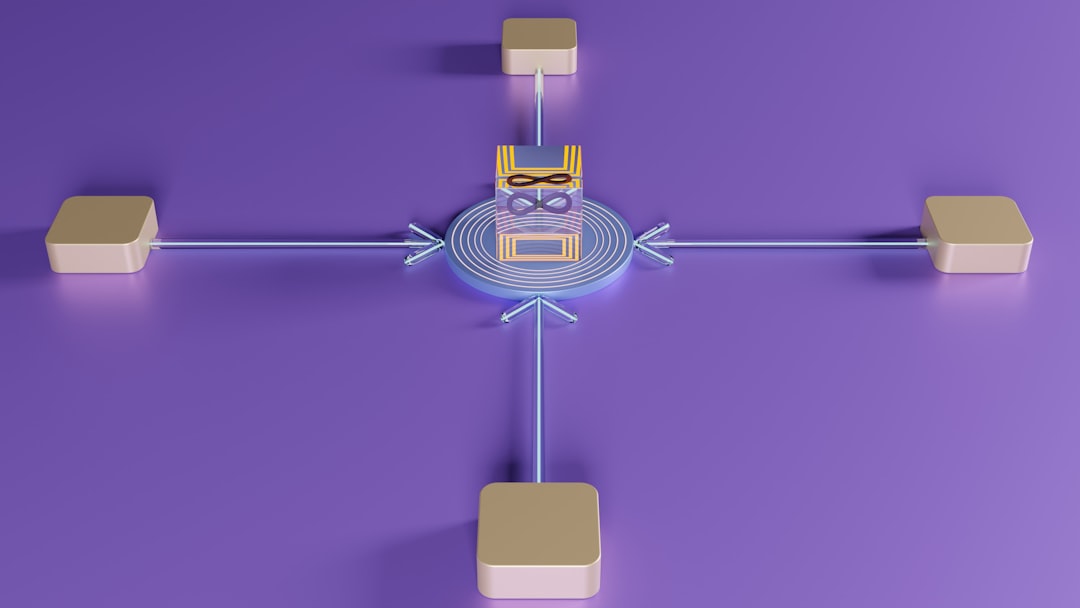
Netlify Edge Functions are one example of this model. Built on modern runtime environments like Deno, they enable developers to write JavaScript or TypeScript that runs directly at the CDN layer. This integration of content delivery and compute creates opportunities for both performance gains and architectural simplification.
Key Benefits of Edge Function Tools
1. Reduced Latency
When compute is executed near the user, the physical distance that data must travel decreases. This results in:
- Faster page loads
- Improved Time to First Byte (TTFB)
- Better responsiveness in dynamic content rendering
2. Global Scalability by Default
Edge function platforms operate on globally distributed infrastructure. Developers do not need to manually configure load balancers across regions or replicate server clusters. Traffic is automatically routed to the optimal node.
3. Lower Infrastructure Management Overhead
Edge logic typically runs within serverless environments. There is no need to manage operating systems, containers, or patch dependencies. This allows teams to focus on business logic rather than infrastructure maintenance.
4. Fine-Grained Request Control
Edge functions can intercept and modify incoming HTTP requests or outgoing responses. This enables capabilities such as:
- Header manipulation
- Redirects and rewrites
- Authentication enforcement
- Geo-based routing
Common Use Cases for Edge Logic
Edge functions are not meant to replace full backend systems. Instead, they excel in specific workloads where proximity to the user provides measurable benefits.
Personalization
One of the strongest use cases is content personalization. By evaluating cookies, user location, or device type at the edge, developers can dynamically adjust content without a centralized API call.
For example:
- Displaying localized promotions
- Serving region-specific language versions
- Adjusting layout based on device type
A/B Testing
Edge functions can route users to different versions of a page with minimal delay. Since the decision happens at the edge, both variants can be cached and delivered efficiently.
Authentication and Security Enforcement
Instead of forwarding requests to a central authentication service, edge logic can validate tokens or session cookies before the request ever hits the origin server. This reduces load and enables early rejection of unauthorized traffic.
Request Transformation
Edge functions can rewrite URLs, inject headers, or transform responses before they are delivered. This is particularly useful for:
- Migrating legacy systems
- Implementing feature flags
- Managing API gateways
Architecture Considerations
While edge functions offer compelling advantages, they are not a universal solution. They represent a shift toward distributed architecture, which brings new technical realities.
Statelessness
Most edge environments are designed to be stateless. Persistent connections and in-memory session storage are typically unavailable or limited. Developers must rely on:
- External databases
- Distributed key-value stores
- Signed cookies or tokens
Cold Starts and Performance Constraints
Although edge runtimes are optimized for fast startup times, execution limits are typically strict. Heavy computation or large dependencies can undermine performance gains.
Best practices include:
- Keeping function bundles small
- Avoiding blocking operations
- Minimizing external network calls
Consistency and Data Locality
Running compute globally introduces potential data synchronization challenges. If edge logic interacts with mutable data, consistency models and caching strategies become critical.

Netlify Edge Functions in Practice
Netlify Edge Functions are designed to integrate seamlessly into modern frontend workflows. Developers define functions within their project repository, and deployment occurs automatically during the build process.
Notable characteristics include:
- Native support for modern JavaScript and TypeScript
- Integration with CDN-level request handling
- Granular route-specific function mapping
- Compatibility with static site generation frameworks
This tight coupling between content delivery and logic execution allows teams to build hybrid systems where static content remains cached while select routes execute dynamic logic.
Comparison with Traditional Serverless Functions
It is important to distinguish between edge functions and centralized serverless functions (such as those running in a single cloud region).
Traditional Serverless:
- Runs in selected regional data centers
- Suitable for heavier workloads and database-intensive operations
- Higher latency for globally distributed audiences
Edge Functions:
- Runs at globally distributed edge nodes
- Optimized for lightweight, fast-executing logic
- Minimizes latency for read-heavy or request-interception tasks
In practice, many production systems combine both approaches. Edge functions handle routing, personalization, and lightweight validation, while centralized serverless functions or microservices manage core business logic.
Security Implications
Deploying logic at the edge can enhance security but also requires disciplined policies.
Advantages:
- Early traffic filtering
- Reduced attack surface on origin servers
- Faster mitigation of malicious requests
Risks:
- Improper validation at the edge can propagate incorrect logic globally
- Misconfigured caching may inadvertently expose personalized data
Security best practices include strict input validation, regular dependency audits, and clear separation between public and private data handling.
Operational and Organizational Impact
Adopting edge function tools affects not only architecture but also team workflows. Frontend developers increasingly gain backend responsibilities as they write logic that influences request handling.
This shift encourages:
- Closer collaboration between frontend and infrastructure teams
- Adoption of DevOps best practices
- Greater emphasis on observability and logging
Monitoring becomes particularly important in globally distributed systems. Logs must be aggregated and analyzed centrally to detect anomalies across edge nodes.
The Strategic Role of Edge Logic
Edge functions should be viewed as a strategic layer rather than a replacement for existing architectures. When deployed thoughtfully, they serve as a performance-enhancing, security-augmenting, and experience-optimizing component of modern applications.
Organizations that benefit most from edge logic typically:
- Operate globally distributed user bases
- Require high-performance personalization
- Depend on SEO-sensitive web delivery
- Maintain hybrid static-dynamic application models
However, success depends on aligning edge deployments with clearly defined objectives. Blindly moving logic to the edge without understanding limitations can create complexity without measurable benefit.
Conclusion
Edge function tools such as Netlify Edge Functions represent a meaningful shift in how web logic is deployed and executed. By bringing computation closer to the user, they reduce latency, improve scalability, and enable powerful request-level customization. Their strengths lie in lightweight, stateless operations that enhance existing backend systems rather than replacing them outright.
As digital experiences continue to evolve toward real-time interaction and global reach, edge logic will likely become a foundational layer of modern application architecture. Organizations that adopt it with technical discipline and architectural foresight stand to gain both performance advantages and operational efficiency in an increasingly distributed web ecosystem.

I’m Sophia, a front-end developer with a passion for JavaScript frameworks. I enjoy sharing tips and tricks for modern web development.